For me, making wine means, first and foremost, listening to the earth. And if there is one voice that, more than any other, defines the soul of my Brunello di Montalcino, it is the voice of Galestro.
Sometimes I stop, I look at it, I hold it in my hand. And inevitably, I travel through time.
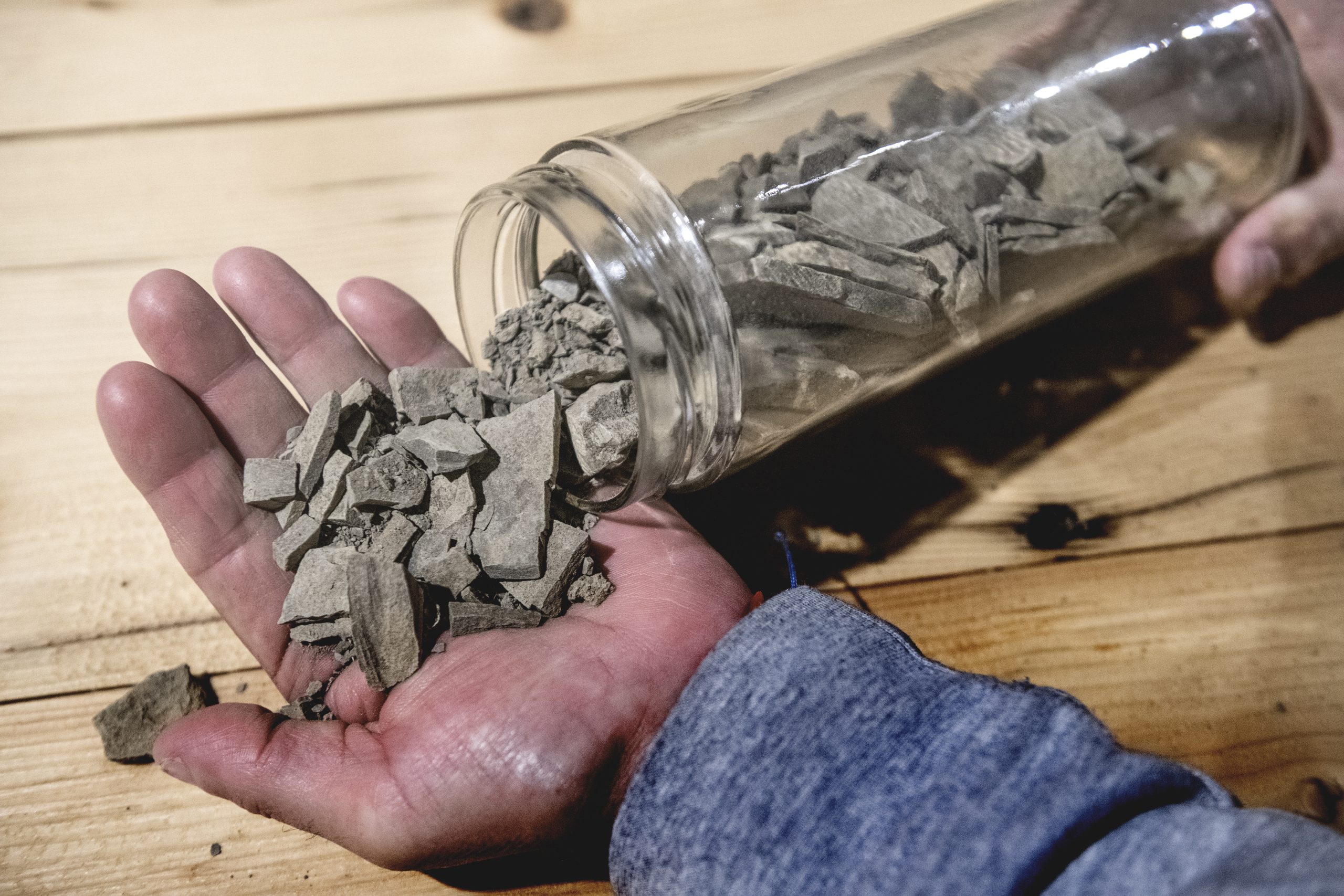
Galestro is not just “soil”: it is an argillaceous schist, a millenary encounter between clay and limestone that emerges in flakes, in prismatic fragments almost as precious as jewels. But its true beauty lies in what it does not immediately surrender—in what must be earned.
The first lesson of Galestro is drainage.
When it rains, the water does not linger on the surface: it glides away, sinks deep, and leaves a "hydric silence" that forces the vine to choose. It is a natural discipline: the plant must sink its roots, enter the heart of the rock, and seek life where life is not comfortable. It is precisely this search, this small daily “struggle,” that builds complexity. The soil remains drier, the air circulates, the clusters breathe: humidity does not dominate, it does not command, and even the weeds do not become masters. Everything is more essential, more taut, more true.
Sometimes I stop, I look at it, I hold it in my hand. And inevitably, I travel through time.
Galestro is not just “soil”: it is an argillaceous schist, a millenary encounter between clay and limestone that emerges in flakes, in prismatic fragments almost as precious as jewels. But its true beauty lies in what it does not immediately surrender—in what must be earned.
The first lesson of Galestro is drainage.
When it rains, the water does not linger on the surface: it glides away, sinks deep, and leaves a "hydric silence" that forces the vine to choose. It is a natural discipline: the plant must sink its roots, enter the heart of the rock, and seek life where life is not comfortable. It is precisely this search, this small daily “struggle,” that builds complexity. The soil remains drier, the air circulates, the clusters breathe: humidity does not dominate, it does not command, and even the weeds do not become masters. Everything is more essential, more taut, more true.
Then there is the mineral imprint, that signature Galestro leaves on Sangiovese without raising its voice.
It is a soil poor in organic matter, yes, but incredibly rich in character: a deposit of minerals that does not show itself off like a gem, but works like a subterranean current. In this terrain, Sangiovese finds a vibrant acidity, a freshness that is almost electric. And the tannins change their face: they become finer, silkier, more velvety. An elegance that does not scream, but imposes itself with grace—like those people who enter a room and have no need to introduce themselves.
And if you dig into the remotest memory of this rock, you find the sea.
Because Galestro is also this: an ancient seabed made of silts and clays that time has compacted, oxidised, and transformed. Then the earth moved, pushing those seabeds upward, bringing them to the hills, delivering them to us with different inclinations and exposures, like pages of the same book opened to different chapters.
It is a soil poor in organic matter, yes, but incredibly rich in character: a deposit of minerals that does not show itself off like a gem, but works like a subterranean current. In this terrain, Sangiovese finds a vibrant acidity, a freshness that is almost electric. And the tannins change their face: they become finer, silkier, more velvety. An elegance that does not scream, but imposes itself with grace—like those people who enter a room and have no need to introduce themselves.
And if you dig into the remotest memory of this rock, you find the sea.
Because Galestro is also this: an ancient seabed made of silts and clays that time has compacted, oxidised, and transformed. Then the earth moved, pushing those seabeds upward, bringing them to the hills, delivering them to us with different inclinations and exposures, like pages of the same book opened to different chapters.
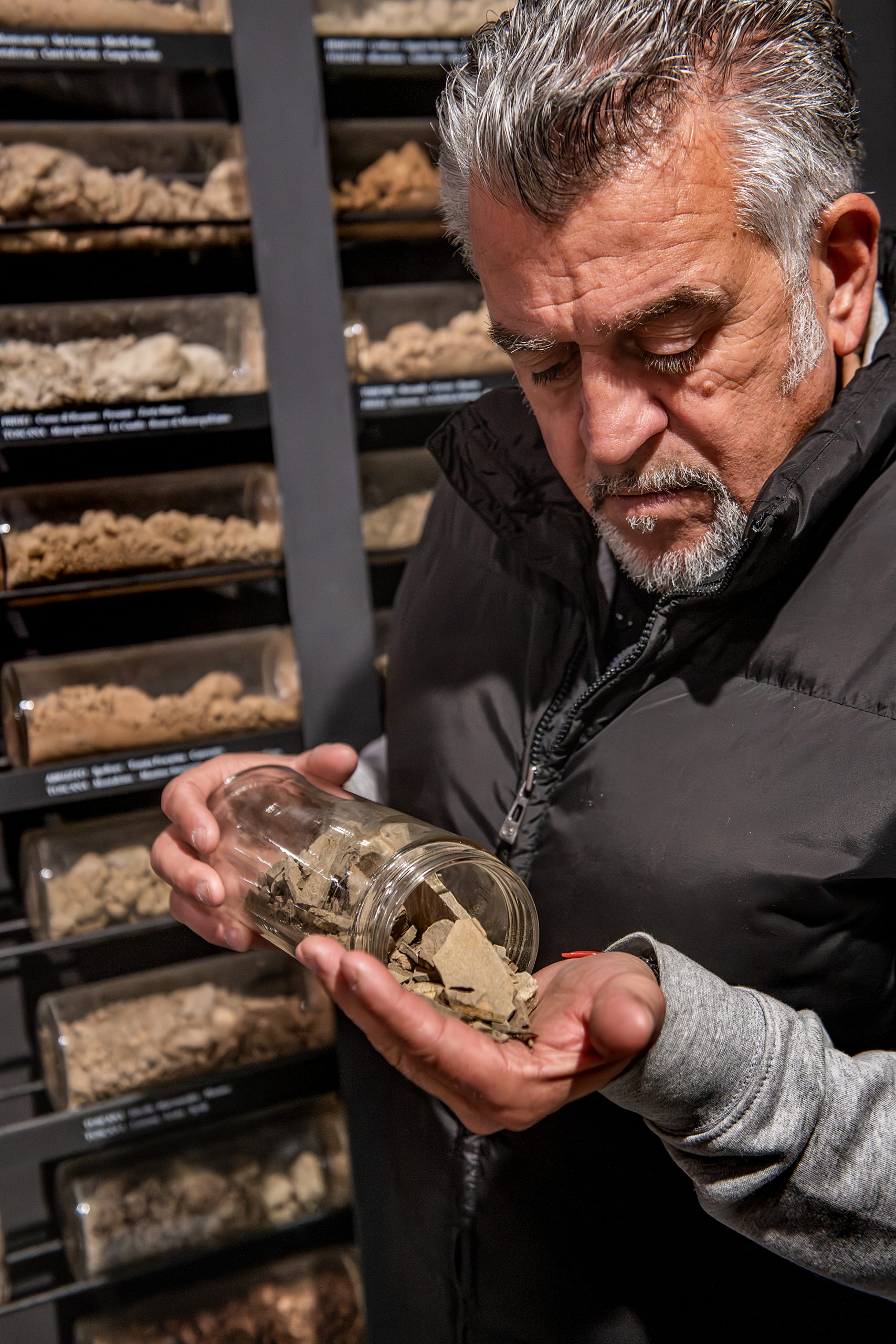
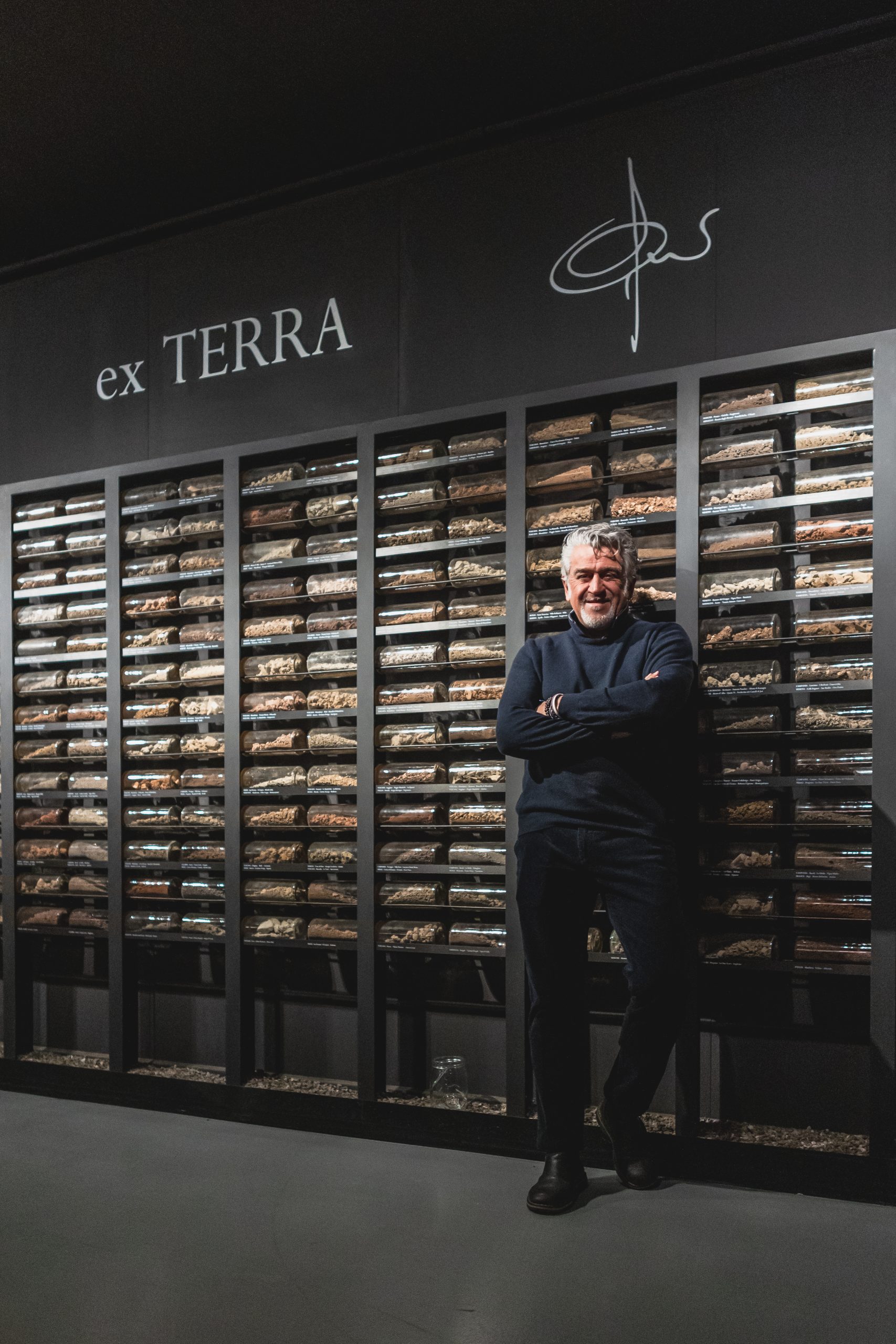
Its metamorphosis is fascinating: Galestro is a friable rock, sculpted by water, time, and ice. Moisture enters the crevices and, when it freezes, the rock splits, explodes into fragments, and becomes gravel. It is a living matter that seems to remember its clay-like origin when it rains, only to return to rock as soon as the sun dries it. A memory that flickers on and off, but never disappears.
Creaminess, velvet, silk: this is what Galestro gives to Sangiovese. For me, there is no soil more ideal for telling the story of this grape and the magic of our territory, because here every flake is a word, and every root is a sentence written in the depths.
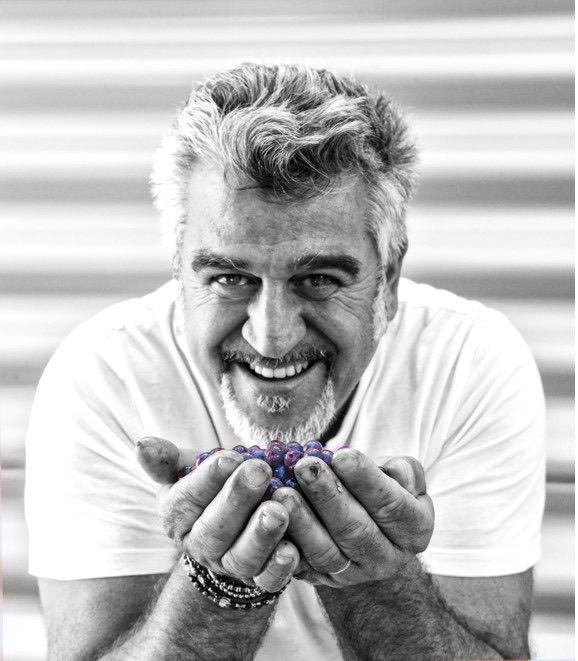
Roberto Cipresso
Consulente Enologico e Autore. Esperto di terroir e viticoltura.